When it comes to predicting job performance in the recruitment process, the debate often centres around IQ (Intelligence Quotient) and EQ (Emotional Quotient). Many consider EQ more important in today's workplace, but is that really the case? In this article, we will delve into the definitions of IQ and EQ and explore their respective roles in predicting job performance.
Defining IQ and EQ:
IQ (Intelligence Quotient)
It is widely regarded as a measure of general intelligence or "g." Decades of
research confirm that "g" is the most
valid predictor of future performance and learning when hiring individuals. Intelligence can be thought of as the ability to deal with cognitive complexity and the rate at which we learn new information. More complex tasks require more mental manipulation, and this manipulation of information – discerning similarities and inconsistencies, drawing inferences, grasping new concepts and so on – constitutes intelligence in action. Occupations differ considerably in the complexity of their demands, and as that complexity rises, higher general intelligence levels become a bigger asset and lower levels a bigger handicap.
EQ (Emotional Intelligence)
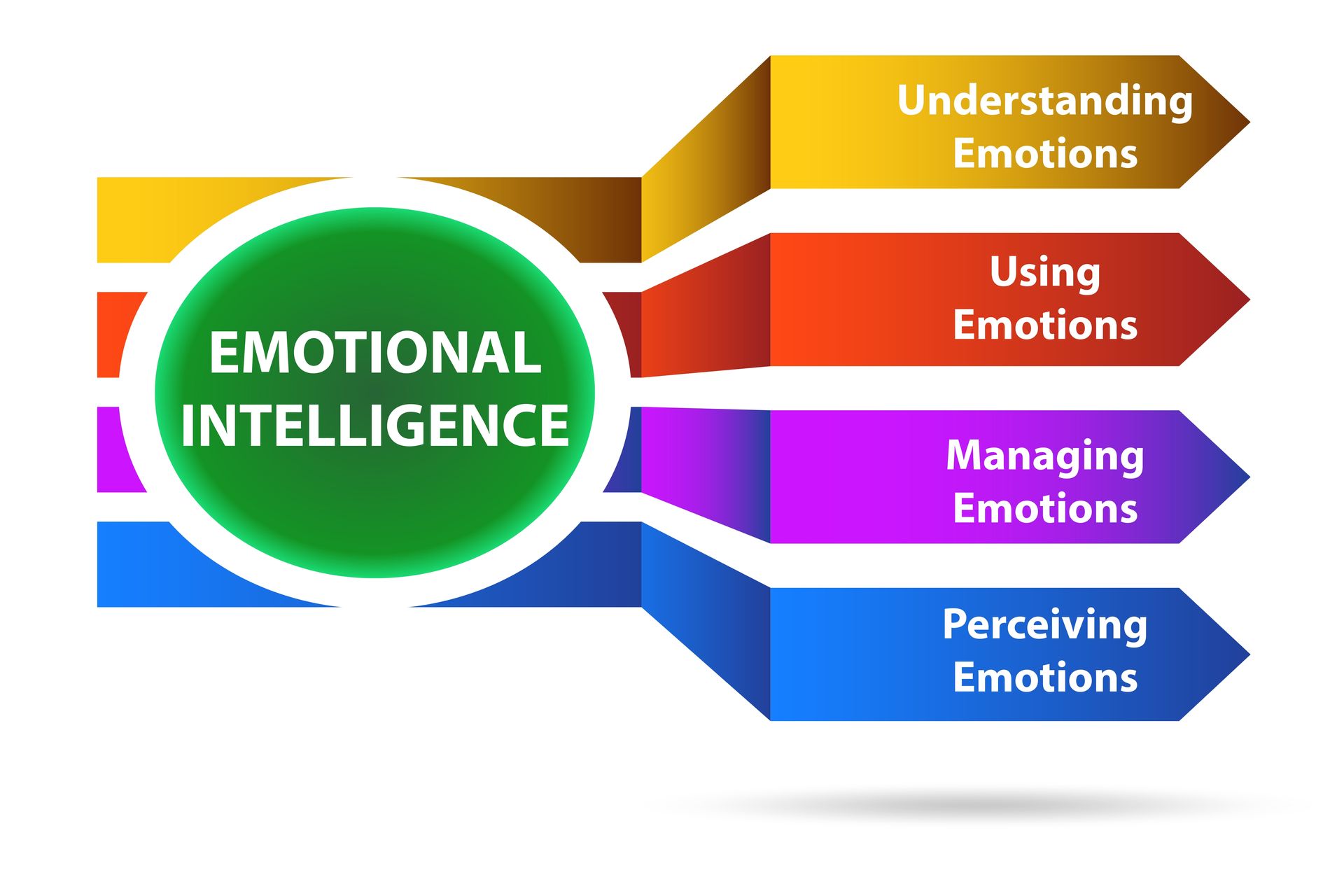
On the other hand, refers to a person's capacity to recognize and manage emotions, both in themselves and in others. It plays a
significant role in job performance, impacting how individuals handle interpersonal relationships, cope with stress, and navigate the dynamics of the workplace.
Research Findings
Associate Professor Carolyn MacCann's
extensive research on the IQ vs EQ debate has provided valuable insights. Her research shows that while EQ is important, IQ remains the stronger predictor of job performance. IQ accounts for roughly 25% of job performance, while EQ contributes less than 5%. This is a substantial, though not dominant, advantage for IQ. EQ shines when it comes to well-being and stress management, making it a valuable asset for handling workplace dynamics and boosting overall job satisfaction.
The Ideal Scenario
It's not a question of IQ or EQ; it's about finding the right balance. Average to high levels of both IQ and EQ are ideal for future employees, depending on the role. For example, consider a candidate for a team leader role who excels in EQ but falls short in IQ. While high EQ is beneficial, the technical aspects of the job are equally crucial, and a lack of technical aptitude can hinder overall performance. Conversely, a candidate with high IQ but low EQ might excel technically but face challenges in interpersonal relations. The sweet spot lies in candidates who score at least average in both IQ and EQ.
Real Life Example
Let's consider a recent candidate we assessed for a customer service role. Her IQ score was 86, and she performed equally poorly on a skills test. However, her EQ stood out at an impressive 113, which is well above the average score of 100. Despite the high EQ score, we recommended to our client that they not hire her. Why? A stellar EQ profile alone wasn't enough. The position required technical skills and the ability to learn the job quickly, and her other test scores strongly suggested she would struggle, despite her high EQ. On the flip side, you also don't want a candidate who excels in technical abilities but lacks emotional intelligence, potentially causing relational issues. In a customer service role, the ideal scenario is to find a candidate scoring in the average range on all tests. This example highlights the need for a balanced approach to assessing both IQ and EQ to make informed recruitment decisions.
Conclusion
In the ongoing IQ vs EQ debate, the answer isn't one or the other. Both IQ and EQ measure distinct psychological constructs that are essential in the workplace. While IQ excels at predicting job performance and learning, EQ contributes significantly to well-being and effective stress management. Ultimately, the ideal scenario is to find individuals who possess a balance of both IQ and EQ. It's not a question of which is better but rather how they complement each other in creating a well-rounded and effective workforce. Having worked as an Organisational Psychologist for many years, I have had the opportunity to explore the nuances of general intelligence and emotional intelligence in the workplace. Through research and practical experience, I have gained valuable insights into the role of IQ and EQ in predicting job performance. This knowledge forms the basis of my perspective in this article, where I aim to provide a well-rounded view of the IQ vs EQ debate in recruitment.